Best barefoot shoes for flat feet 2026
Flat feet don't need arch support. Tey need stronger muscles. We picked the 6 best barefoot shoes for flat feet, with a safe transition plan to rebuild your arches naturally.
If you have flat feet, you've probably been told you need arch support. But most flat feet are caused by weak foot muscles, not structural problems. Barefoot shoes let those muscles work again, and for many people, the arches come back. We picked 6 shoes that make the transition safe and comfortable.
🏆 Quick picks
- Best overall for flat feet: Lems Primal 2, widest toe box, slight cushioning for the transition
- Best value: Xero HFS II, durable, versatile, $110
- Best for arch strengthening: Vivobarefoot Primus Lite IV, thinnest sole, maximum muscle activation
- Best budget pick: WHITIN Minimalist Trail, try the approach for under $45
Quick comparison
| Shoe | Price | Rating | Best For | |
|---|---|---|---|---|
| Lems Primal 2 | $105 | 4.4/5 | Wide feet | Check Price → |
| Xero Shoes HFS II | $110 | 4.5/5 | Best value | Check Price → |
| Vivobarefoot Primus Lite IV | $160 | 4.7/5 | Everyday wear | Check Price → |
| New Balance Minimus Trail v2 | $110 | 4.2/5 | Stealth barefoot | Check Price → |
| WHITIN Minimalist Trail Runner | $45 | 4/5 | Budget pick | Check Price → |
| Lems Nine2Five | $135 | 4.3/5 | Work shoe | Check Price → |
Can barefoot shoes actually help flat feet?
There are two types of flat feet, and the distinction matters:
Functional flat feet
Caused by weak or inactive foot muscles. The arch can form when you stand on your toes or when the foot isn't bearing weight. This is the most common type.
✅ Barefoot shoes can help significantly
Structural flat feet
Caused by bone structure, genetics, or joint conditions. The arch doesn't form regardless of foot position. Less common.
⚠️ Consult a podiatrist first
For functional flat feet, the science is straightforward. Traditional shoes with arch support do the work for your foot muscles. Over years, those muscles weaken, and the arch collapses further. Barefoot shoes reverse this cycle by forcing your intrinsic foot muscles to activate and strengthen.
A 2018 study found that walking in minimalist shoes for just 12 weeks increased foot muscle size and arch stiffness. Another study showed significant improvements in balance and arch height after 6 months of minimalist footwear use. The evidence is encouraging, but the transition needs to be gradual.
What to look for in a barefoot shoe for flat feet
- Wide toe box: Your toes need room to spread and grip the ground. This activates the muscles that support your arch. Non-negotiable.
- Zero drop: A flat heel-to-toe profile lets your foot sit in its natural position, engaging the entire kinetic chain from ankle to arch.
- Flexible sole: The sole should bend easily in all directions. Stiff soles prevent your foot muscles from working properly.
- Moderate stack height to start: If you're transitioning from orthotics or supportive shoes, start with 9-12mm and work down to 6mm or less over several months.
- No arch support: This sounds counterintuitive, but built-in arch support prevents the very muscle activation you need.
Best barefoot shoes for flat feet, reviewed
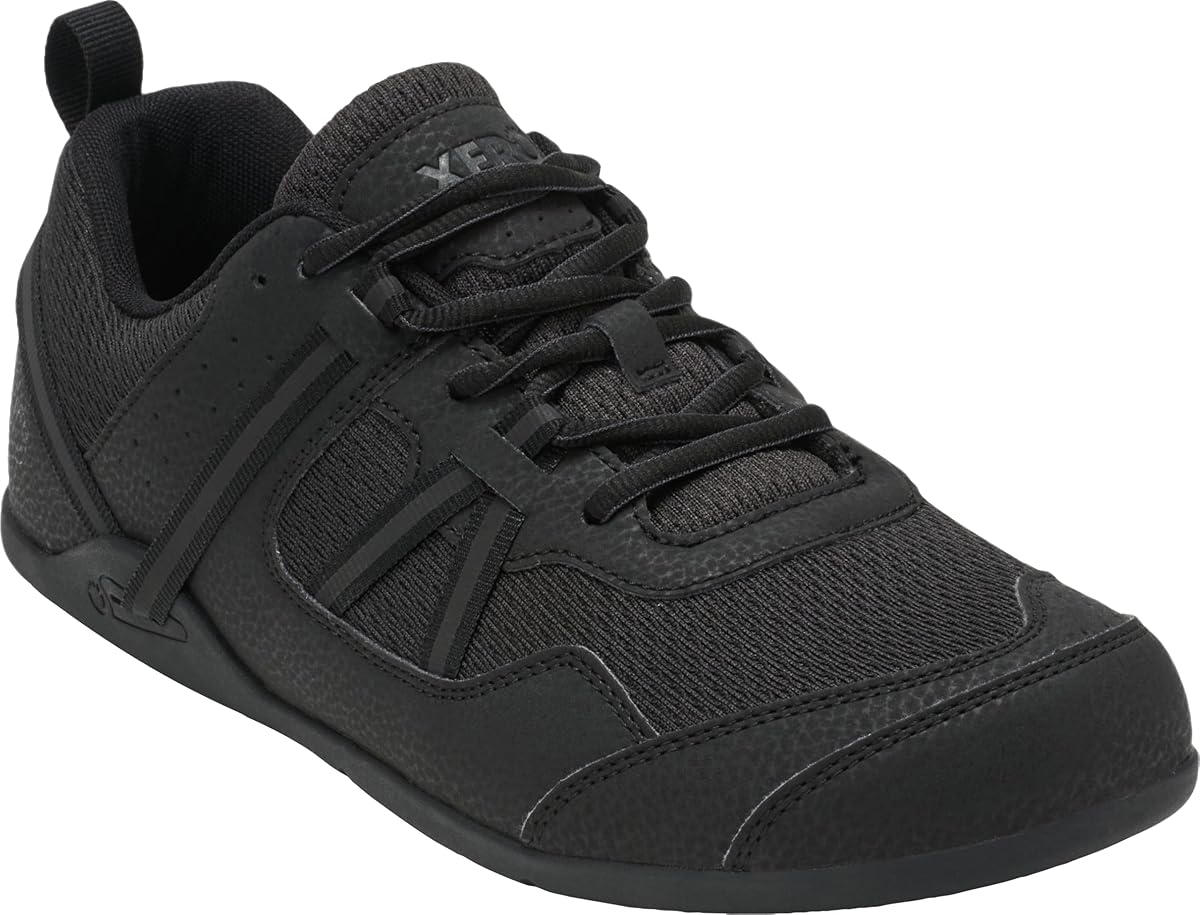
Lems Primal 2
Lems Primal 2 offers one of the widest toe boxes available with a natural foot shape and clean aesthetic. Slightly more cushioned than pure minimalist shoes, making it a great transitional option.
✓ Pros
- • Widest toe box in its class
- • Clean casual styling
- • Comfortable straight out of box
- • Good for wider feet
✗ Cons
- • Less ground feel than thinner options
- • Limited color options
- • Not ideal for running
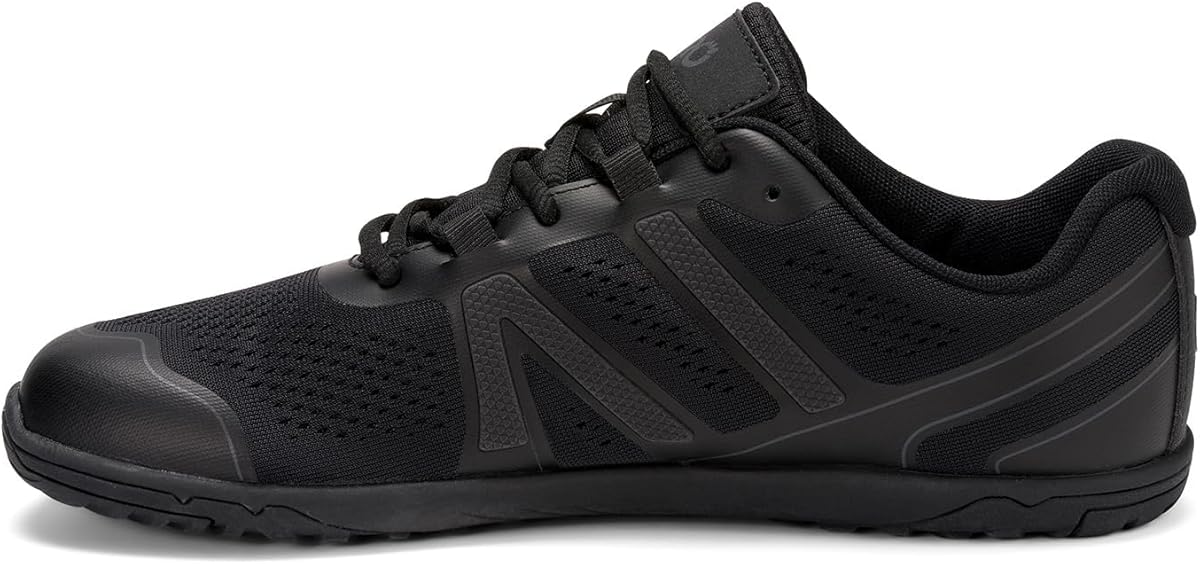
Xero Shoes HFS II
Xero's most popular shoe combines a thin, flexible sole with impressive durability. The HFS II works equally well for short runs and everyday wear, making it the best value in barefoot shoes.
✓ Pros
- • Excellent value for money
- • Good ground feel
- • Works for running and daily wear
- • 5,000-mile sole warranty
✗ Cons
- • Not as flexible as Vivobarefoot
- • Styling is polarizing
- • Can run narrow for very wide feet
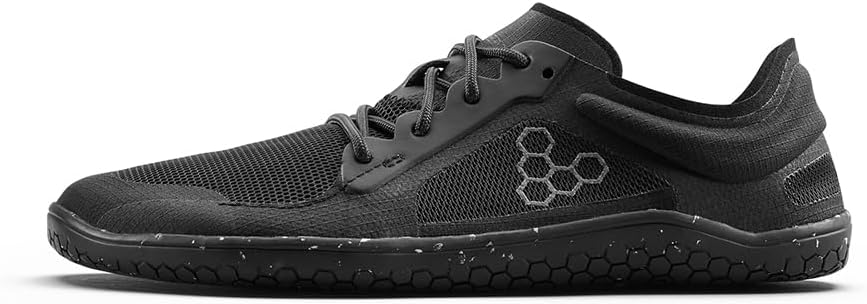
Vivobarefoot Primus Lite IV
The gold standard for everyday barefoot shoes. The Primus Lite IV delivers exceptional ground feel with a 6mm sole, wide toe box, and featherlight construction. Perfect for walking, light gym work, and daily wear.
✓ Pros
- • Ultra-thin sole for maximum ground feel
- • Extremely lightweight
- • Recycled materials
- • Versatile everyday shoe
✗ Cons
- • Premium price point
- • Durability concerns on rough surfaces
- • Takes adjustment if new to barefoot
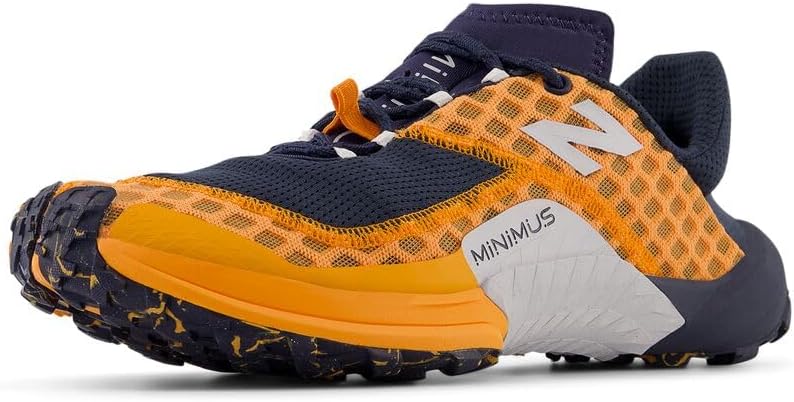
New Balance Minimus Trail v2
New Balance's Minimus looks like any other NB trainer, and that's the point. Zero drop with a Vibram sole, it's the stealth option for people who want barefoot benefits without the barefoot look.
✓ Pros
- • Mainstream brand recognition
- • Nobody will notice these are barefoot
- • Vibram outsole
- • Available everywhere
✗ Cons
- • Toe box narrower than dedicated barefoot brands
- • Less ground feel than true minimalist
- • NB sizing can vary
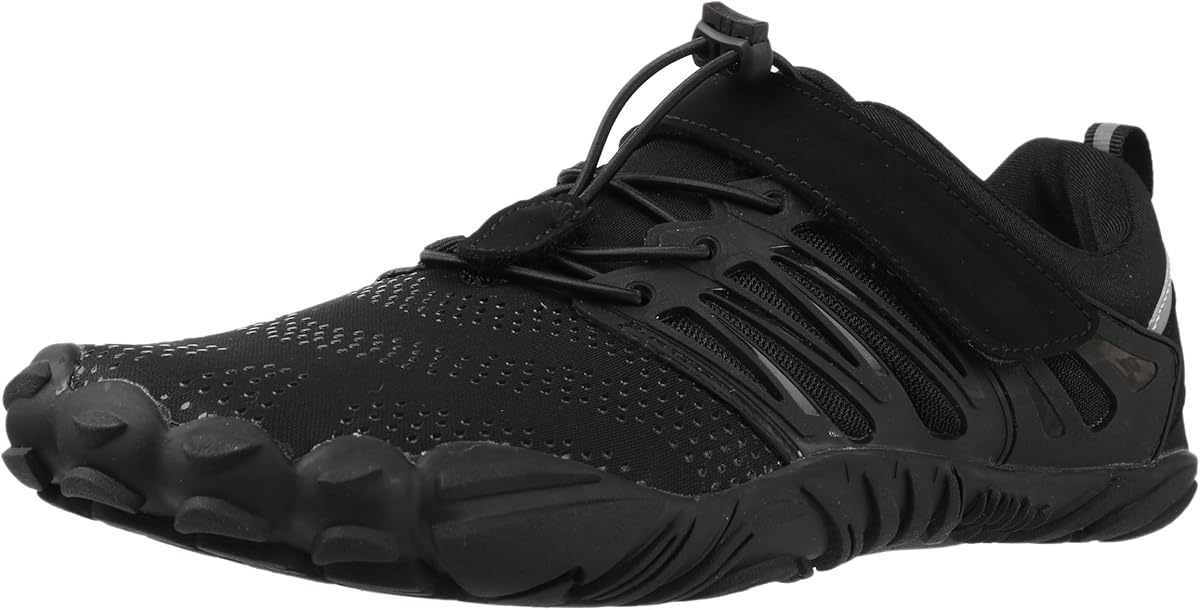
WHITIN Minimalist Trail Runner
At under $50, WHITIN's trail runner is the most affordable way to try barefoot shoes. Wide toe box, zero drop, and reasonable quality make it a risk-free entry point into minimalist footwear.
✓ Pros
- • Incredible value
- • Wide toe box
- • Good for trying barefoot shoes
- • Available on Amazon
✗ Cons
- • Less durable than premium brands
- • Basic materials
- • Sole grip is mediocre
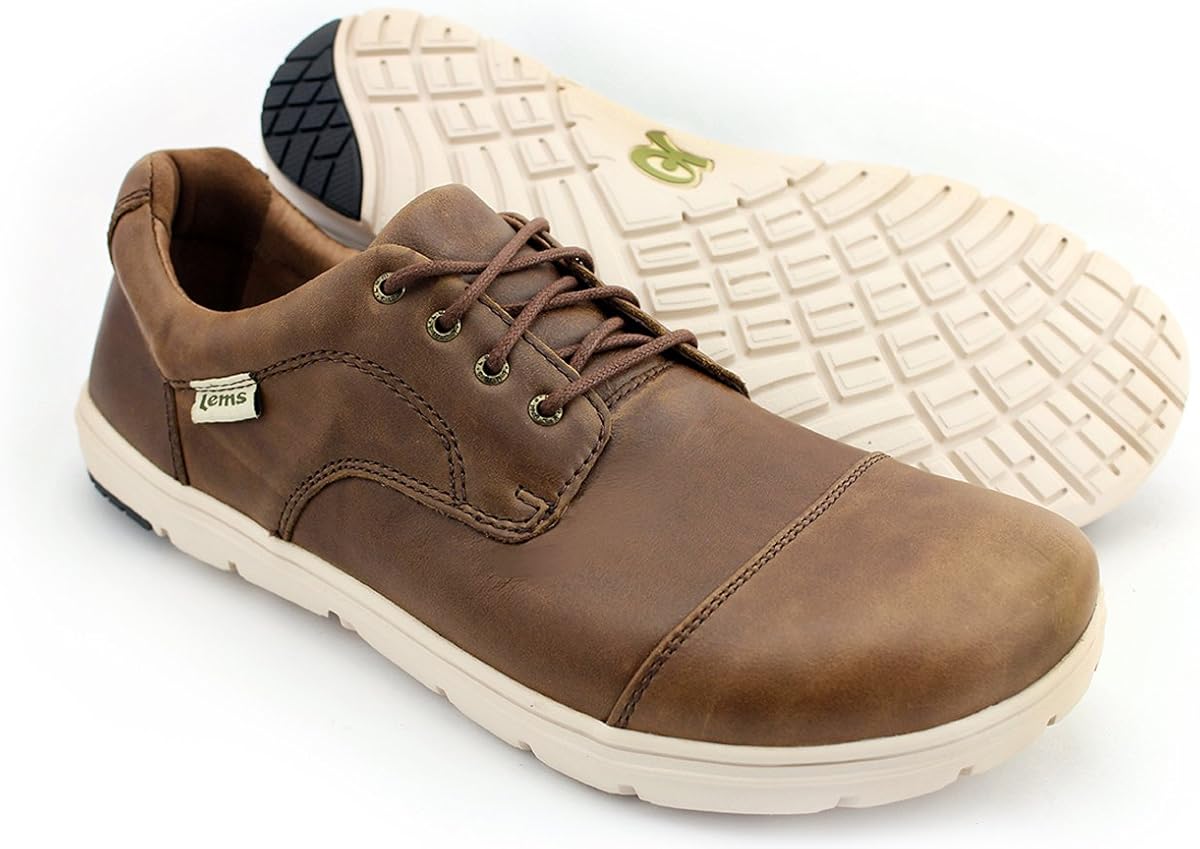
Lems Nine2Five
The Nine2Five bridges the gap between barefoot comfort and office appropriateness. An extra-wide toe box and zero drop hidden behind clean, professional styling. The easiest barefoot shoe to wear to work.
✓ Pros
- • Office-appropriate styling
- • Extremely comfortable
- • Wide toe box
- • Good value for dress barefoot
✗ Cons
- • More casual than true dress shoes
- • Limited to darker colors
- • Thicker sole reduces ground feel
Transition guide for flat feet
If you have flat feet, you need to transition even more gradually than someone with normal arches. Your foot muscles have likely been dormant for years. Rush it and you'll end up with plantar fasciitis or shin splints.
| Phase | Duration | What to do | What to expect |
|---|---|---|---|
| Prep | Weeks 1-2 | Walk barefoot at home. Do toe yoga and towel scrunches daily. | Mild fatigue in foot muscles |
| Phase 1 | Weeks 3-4 | Wear barefoot shoes 1-2 hours for short walks only | Calf soreness, arch fatigue |
| Phase 2 | Weeks 5-8 | Increase to 3-4 hours daily. Add single-leg balance exercises. | Improving balance, less fatigue |
| Phase 3 | Months 3-4 | Full-day wear for walking. Continue exercises. | Noticeably stronger feet |
| Phase 4 | Month 5+ | Progress to thinner soles if desired. Begin light running. | Measurable arch improvement |
Essential exercises for flat feet
These exercises directly target the muscles that support your arch. Do them daily, they're more important than the shoe itself.
- Short foot exercise: While standing, try to shorten your foot by pulling the ball of your foot toward your heel without curling your toes. Hold 5 seconds, 10 reps. This is the single best exercise for arch strength.
- Toe yoga: Lift your big toe while keeping other toes down, then switch. 2 minutes per foot.
- Single-leg balance: 30 seconds per foot, 3 times daily. Progress to eyes closed.
- Towel scrunches: Scrunch a towel toward you with your toes. 3 sets of 10.
- Calf raises: 3 sets of 15. Slow eccentric (3 seconds down). This strengthens the posterior chain that supports the arch.
⚕️ When to see a doctor
If you have pain on the inside of your ankle, sharp heel pain that worsens in the morning, or your flat feet are accompanied by knee or hip pain, see a podiatrist before switching to barefoot shoes. These could indicate structural issues that need professional assessment.
FAQ
Are barefoot shoes good for flat feet?
For most people with functional flat feet (caused by weak muscles), yes. Barefoot shoes let your foot muscles work naturally, which can strengthen your arches over time. However, if you have structural flat feet (a bone/joint condition), consult a podiatrist before making the switch.
Will barefoot shoes fix my flat feet?
They won't "fix" structural flat feet. But if your arches collapsed from years of supportive shoes and weak foot muscles, barefoot shoes combined with foot exercises can rebuild arch strength over several months. Many people report measurable arch improvement after 6-12 months.
Do I need arch support if I have flat feet?
Not necessarily. Traditional arch supports prop up your arch externally, which can actually weaken foot muscles over time. Barefoot shoes take the opposite approach. Tey let your foot muscles do the work, gradually building strength and natural arch support. The transition needs to be gradual though.
How long does it take for flat feet to improve with barefoot shoes?
Most people notice improved foot strength within 4-8 weeks. Visible arch changes typically take 3-6 months of consistent barefoot shoe use combined with foot exercises. Full adaptation can take up to a year.
Should I start with a more cushioned barefoot shoe if I have flat feet?
Yes. A slightly thicker sole (8-12mm) like the Lems Primal 2 or New Balance Minimus gives your feet some protection while they build strength. You can progress to thinner soles like the Vivobarefoot Primus Lite after a few months.
Related guides
- Best barefoot shoes for plantar fasciitis, often related to flat feet
- Best barefoot shoes for beginners, complete starter guide
- Best barefoot shoes 2026, all categories
- Wide toe box shoes, essential for flat feet
- Barefoot vs. traditional shoes, the science
- Zero drop shoes guide
- Shoe finder quiz, find your match in 60 seconds